Data center interconnection refers to the physical and logical connections between networks, clouds, carriers, and systems that exist within or pass through a data center facility. It includes the cables, switching infrastructure, and agreements that allow different organizations to exchange traffic privately, reach cloud on-ramps, or connect across internet exchange points.
In practice, data center interconnection covers a range of connection types and ecosystem relationships, each with different implications for performance, cost, and architectural flexibility. A cross connect is a direct, physical cable between two parties in the same facility. An internet exchange point (IXP) is a switching fabric where many networks peer together. A cloud on-ramp is a managed path from the facility to a cloud provider’s edge. Each of these is a form of interconnection, but they serve different purposes and carry different implications for architecture quality.
Why interconnection matters beyond basic connectivity
Internet access and interconnection are not the same thing. While most data centers can deliver internet-facing traffic, interconnection determines how efficiently that traffic is exchanged and how flexibly architectures can evolve over time. Interconnection determines the quality and flexibility of how that traffic is exchanged, how cloud services are reached, and how network architecture can evolve over time.
A facility with a thin interconnection ecosystem forces buyers to rely on external carriers for every connection that matters. A facility with a deep ecosystem lets the buyer bring partners, carriers, clouds, and content networks within close range. The design implications are significant: latency, cost structure, provider lock-in risk, and resilience all change depending on what interconnection options actually exist at the site.
This is especially relevant in APAC, where the combination of geographic spread, regulatory variation, and submarine cable geography makes interconnection quality one of the clearest differentiators between data center markets.
What is a Cross Connect?
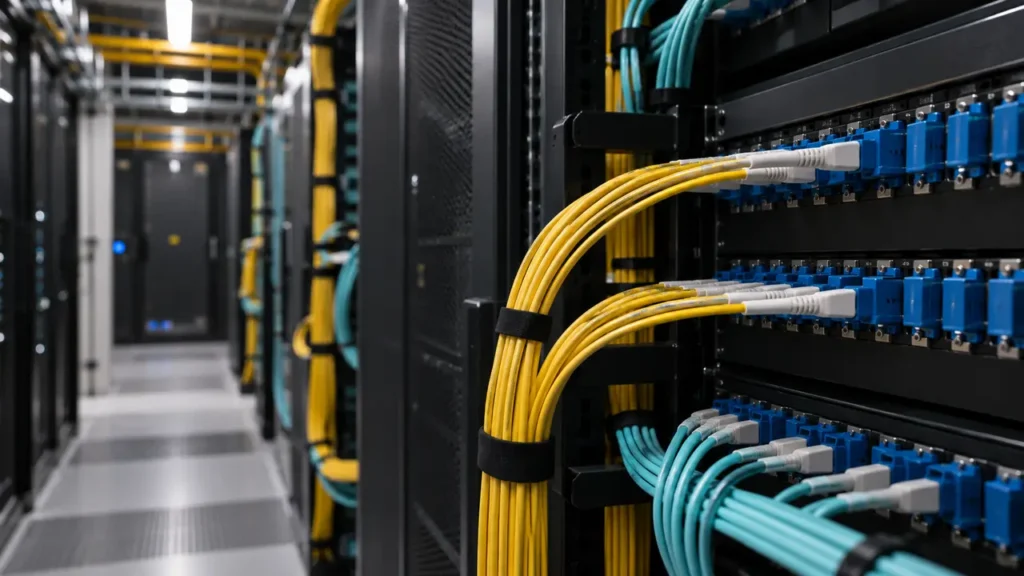
A cross connect is a direct physical cable between two customers or between a customer and a network service provider within the same facility. Cross connects eliminate the need for traffic to leave the building to reach a counterparty. That has meaningful effects on latency, cost, and security.
For enterprise buyers, the practical value of a cross connect depends entirely on who else is in the facility. A cross connect matters when it connects to a carrier whose routes are needed, a cloud provider’s edge node, a content network, a peering partner, or an adjacent platform. In a thin ecosystem, cross connects are available but architecturally unremarkable. In a rich ecosystem, they become one of the strongest arguments for choosing a specific site.
What is an internet exchange point?
An internet exchange point (IXP) is a shared switching infrastructure where multiple networks connect to exchange traffic directly. Participants — typically ISPs, CDNs, enterprise networks, and cloud providers — peer with each other to exchange traffic without routing it through a third-party transit provider.
Not all internet exchanges carry the same strategic weight. The value depends on the mix of participants, the volume of traffic that can be exchanged locally, and whether the exchange includes participants relevant to the buyer’s workload. Facilities that host major IXPs — or provide access to them — typically offer buyers better options for content delivery, CDN connectivity, and distributed traffic management. In markets like Indonesia, access to a well-established internet exchange can significantly improve latency, routing efficiency, and local traffic exchange.
What are cloud on-ramps?
Cloud on-ramps are dedicated, private-path connections from a colocation facility to a major cloud provider’s network edge. AWS Direct Connect, Microsoft Azure ExpressRoute, and Google Cloud Interconnect are the major examples. They replace the public internet as the path to cloud resources and offer more predictable performance, lower latency, and better security posture for workloads that depend heavily on cloud services.
The presence and quality of cloud on-ramp options at a facility is a significant procurement factor for enterprise buyers with hybrid or cloud-first architectures. A facility that supports multiple cloud on-ramps, with genuinely separate termination points for redundancy, reduces design complexity and improves resilience options. See route diversity checklist for what to verify before committing.
How does interconnection affect architecture decisions?
Interconnection quality shapes several downstream architecture decisions that many buyers do not anticipate until after they have committed to a facility.
Carrier selection becomes more constrained at facilities with limited provider presence. Cloud on-ramp redundancy depends on whether two separate physical paths are actually available. Partner connectivity for B2B or supply-chain workloads depends on whether relevant counterparties are already in the ecosystem or accessible via short-hop cross connects. Latency for performance-sensitive workloads depends on where traffic must travel to reach key services. And resilience design depends on whether route diversity is genuinely achievable or only theoretical at the chosen site.
That is why interconnection should be a primary buying criterion rather than a checkbox evaluated at the end of the procurement process. The site chosen determines the network options available for the life of the deployment.
What makes a carrier-neutral facility different?
A carrier-neutral facility is one where the operator does not own or favour a single network provider. Any qualified carrier can install equipment and offer services. This matters because it creates genuine competition among carriers and prevents the site from creating artificial lock-in around a preferred provider.
In practice, carrier neutrality is most valuable when the ecosystem is already populated with relevant carriers. A technically neutral facility with few active carriers still limits buyer options. That is why carrier-neutral interconnection in Asia should be evaluated by ecosystem depth, not just the formal designation.
How does interconnection quality differ by APAC market?
The practical meaning of strong interconnection varies significantly across APAC markets. Tokyo, Singapore, and Sydney have established ecosystems with major IXPs, broad carrier choice, and multiple cloud on-ramp options. Jakarta, Manila, and emerging ASEAN markets are developing faster than commonly assumed but still require more careful evaluation of what is actually present versus what is planned.
In some markets, architecture decisions are best anchored in a highly connected hub, with private circuits extending reach to less-connected satellite sites. In others, outcome depends on the specific carriers, clouds, and partners the workload needs to reach. There is no single APAC interconnection solution. The market, the workload, and the future architecture shape must be evaluated together.
For markets where Singapore data centers or Tokyo data centers serve as regional hubs, interconnection quality is often the primary reason for the hub designation, not just latency or geography. And for many teams, this is where working with a provider that operates across multiple APAC markets can simplify design and future expansion decisions.
Conclusion
Data center interconnection is not a single feature. It is the combination of cross connects, internet exchanges, cloud on-ramps, carrier choice, and ecosystem depth that determines how much architectural flexibility a deployment actually has. The label matters less than the substance.
Buyers who evaluate interconnection seriously — before committing to a facility or market — tend to end up with more resilient designs, fewer forced carrier choices, and better long-term options for their APAC footprint.
CTA
Digital Edge interconnection services bring together carrier neutrality, cross connects, and cloud on-ramps across APAC markets where ecosystem depth matters most — reach out to our team to discuss how interconnection at your chosen site supports your architecture.