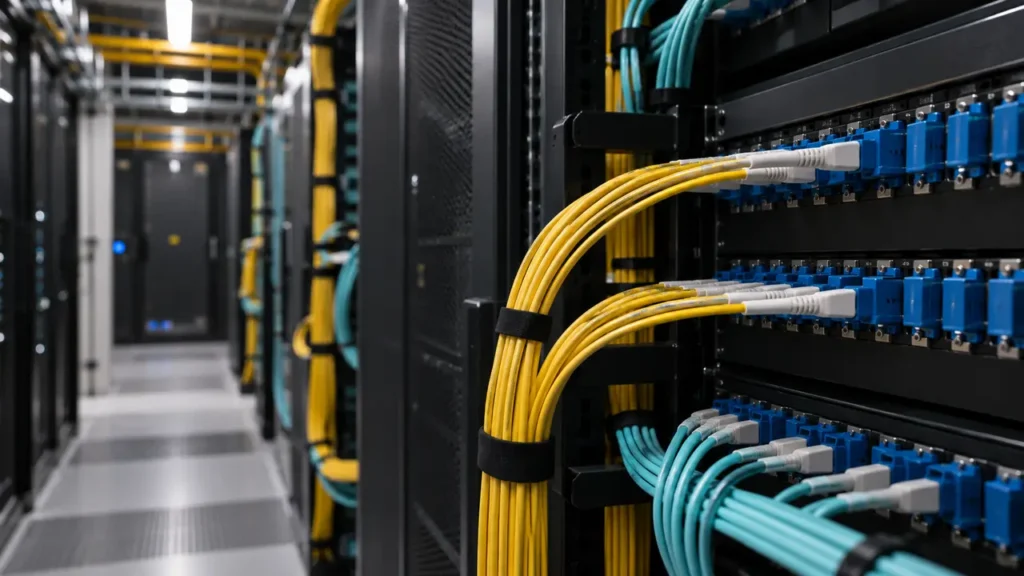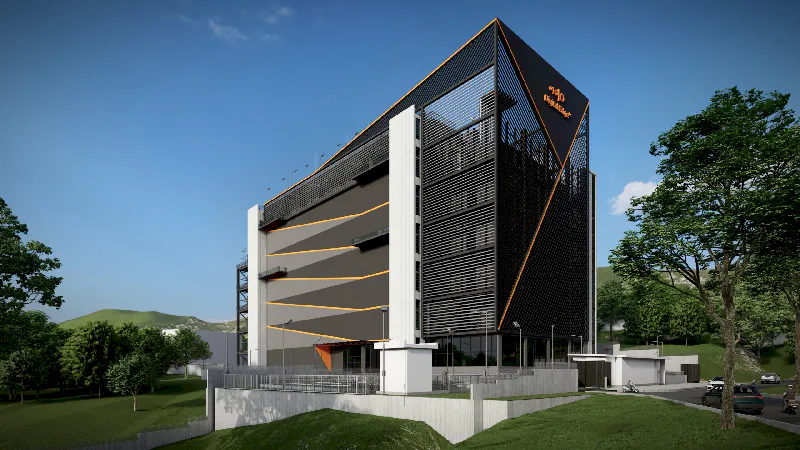
As demand for cloud, AI, and digital infrastructure grows across Asia, more teams are evaluating what a hyperscale data center deployment should look like today, and over multiple phases. This guide outlines how to assess hyperscale data centers with a focus on long-term scalability, market fit, and execution certainty.
What counts as a hyperscale deployment?
A hyperscale deployment usually means the buyer is planning for repeatable large-capacity growth rather than a one-time footprint. The exact threshold varies, but the common pattern is a larger initial commitment, a clear expansion path, and infrastructure decisions that need to hold up over multiple phases.
That distinction matters because it changes the buying process. The team is not simply asking whether space and power are available today. It is asking whether the site, the market, and the provider relationship will still work when the deployment doubles, densifies, or becomes more strategically important.
For most buyers, the key question is not whether a site qualifies as hyperscale today, but whether it can support repeatable growth without introducing friction at each phase.
Why is hyperscale evaluation different from a standard colocation shortlist?
The evaluation is different because the main risk shifts from day-one qualification to long-term fit. A site can look acceptable for the first phase and still be weak once expansion, power delivery, and network growth become more important.
In practical terms, hyperscale buyers are underwriting future optionality. They need to understand how capacity expands, what dependencies sit behind that expansion, whether the market can support a larger footprint, and how the provider handles the operating complexity that comes with larger-scale environments. That is why Hyperscale infrastructure should be treated as a different conversation from a standard retail or even conventional wholesale shortlist.
Which infrastructure factors matter most?
The most important factors are usually power trajectory, expansion logic, interconnection fit, and operational scalability. Those four areas determine whether the environment can keep up once the deployment stops being a first-phase project and starts becoming a platform.
- Power trajectory matters because the buyer needs to know not only what is contractable now, but how the next increments are expected to arrive and what assumptions sit behind them.
- Expansion logic matters because the first phase should not trap the deployment inside a footprint that becomes awkward to grow.
- Interconnection services matter because large cloud, platform, and AI environments still depend on clean data movement and low-friction network evolution.
- Operational scalability matters because the support model, change process, and serviceability requirements get more demanding as the footprint becomes larger and more business-critical.
Why does market selection matter so much in Asia?
Market selection matters because APAC is not one operating environment. The best market for an in-country demand node may be the wrong market for a regional platform, a future campus, or a denser AI-adjacent footprint.
The buyer should therefore screen markets on more than headline demand. Utility trajectory, land or expansion fit, connectivity ecosystem depth, regulatory conditions, climate and sustainability considerations, and customer latency requirements all shape the answer. In practice, this means considering how different markets such as India , Indonesia , or Thailand align with long-term deployment and expansion strategy.
How phased-expansion claims hold up under scrutiny
A useful test is to phase expansion by asking what exactly is reserved, what depends on future delivery events, and what could still delay the next step. “Room to scale” is not a useful answer unless the path is operationally legible.
A stronger diligence process asks whether the next phase depends on utility upgrades that are not yet complete, whether adjacent land or halls are already committed elsewhere, whether the cooling and network design can evolve without reworking the first deployment, and how much commercial certainty exists around later capacity blocks. To help structure diligence, buyers can use a simple set of questions:
- What capacity is contractually secured today?
- What depends on future utility delivery?
- Is adjacent expansion already allocated?
- Can network architecture scale as interconnection needs grow?
Those questions matter because hyperscale buying mistakes are often caused by overconfidence in future phases that were never clearly defined.
Compliance, power, water, and land — the local-conditions layer
In practice, hyperscale viability is shaped by four local conditions:
- Regulatory
- Power/energy
- Water/cooling
- Land/expansion
Compliance and data-residency rules differ sharply across India (DPDP Act), Indonesia (PDP Law), Thailand (PDPA), and Japan (APPI) — and they shape what workloads can run where before any infrastructure decision is made. Power trajectory depends on grid characteristics, the local renewable procurement environment, and the speed at which utilities can deliver next-phase capacity. Water access — increasingly constrained in humid metros — affects cooling design choices and reporting credibility. Land cost and acquisition cycle drive whether phased expansion is feasible at the originally chosen site or has to migrate. None of these are deal breakers individually; together they’re what separates a hyperscale market from a hyperscale aspiration.
Why do interconnection and AI readiness still belong in a hyperscale article?
Even for non-AI deployments today, buyers increasingly consider how workloads may evolve. This makes network flexibility and future density readiness relevant early in the lifecycle. A large deployment can still fail strategically if network evolution is weak or if the environment becomes restrictive once denser workloads arrive.
This is why hyperscale content should connect to both AI Infrastructure resources and Sustainability resources. Larger footprints eventually force questions about cooling path, density progression, renewable-energy strategy, and how the operating model holds up when the deployment becomes more power- and data-intensive. Treating those as separate conversations too early creates blind spots.
Conclusion
The right hyperscale data center Asia decision is less about securing initial capacity and more about ensuring the platform can scale without constraint. The right partner should be able to demonstrate how your deployment evolves – across phases, markets, and workloads – before you commit. This is where early engagement with the platform team can add value, by stress-testing assumptions before they become constraints.
Talk to Digital Edge
Stress-test your hyperscale plan beyond the first phase. Work with the Digital Edge team to assess how your deployment can scale across markets, capacity, and workload evolution. Speak with the Digital Edge platform team.