As organizations expand across Asia-Pacific (APAC), the Philippines is becoming an increasingly important location for digital infrastructure. Whether you’re supporting customers in metro Manila or expanding cloud deployments, evaluating colocation in the Philippines means weighing realities that differ sharply from Singapore or Tokyo. Power redundancy, sovereignty rules, subsea connectivity, and tropical-climate cooling all behave differently here. This guide walks through what enterprise buyers should actually evaluate before committing colocation capacity in the market — and where the strongest local facilities fit.
Why is the Philippines on more APAC shortlists?
Demand is the simple answer. The Philippines is one of the fastest-growing cloud and digital economies in Southeast Asia, supported by a large, young, digitally connected population and a deep business-process outsourcing (BPO) sector. As enterprises continue to invest in cloud, AI, and digital services, demand for local infrastructure is growing rapidly. For organizations serving users in the Philippines, hosting infrastructure closer to customers can help reduce latency, improve user experience, and provide greater operational control. As a result, many enterprises now view in-country as an important part of their regional infrastructure strategy rather than a secondary option.
Digital Edge operates here through its , anchored by a carrier-neutral campus built for network, cloud, and enterprise deployments. Crucially, the opportunity is hyperscale-ready, not only enterprise: Digital Edge builds for both hyperscale and enterprise colocation requirements, so cloud platforms and AI operators can anchor capacity here rather than treating the Philippines as an enterprise-only market. For buyers, the practical takeaway is that the market has crossed the threshold where in-country deployment is a performance decision, not a compromise.
How reliable is the power supply?
Reliable power is one of the most important considerations when selecting a colocation provider. The Philippines runs three major grids — Luzon, Visayas, and Mindanao — and the Luzon grid that serves Metro Manila has periodically issued supply alerts during peak demand and plant outages. While the country’s electricity infrastructure continues to strengthen, enterprises should look closely at how a facility is designed to maintain availability during grid fluctuations or outages.
A robust data center design can help ensure business continuity and give customers confidence that critical applications remain available when they are needed the most. The strongest local campus provisions each cabinet at 5kVA and customizable to 15kVA or above (subject to specific customer requirement) with N+1 concurrently maintainable uninterruptible power and a 100% dual-power SLA — the kind of redundancy that absorbs grid variability rather than passing it to your racks. Buyers should ask for the single-line diagram, generator autonomy, and fuel-supply contracts, not just a headline uptime figure. For the wider energy context — generation mix, reserve margins, and the renewables build-out — the Philippines electricity profile — IEA is a useful independent reference.
What are the data sovereignty and compliance rules?
This is where the Philippines is more flexible than buyers often expect. The country has no general data-localization mandate — the Data Privacy Act of 2012 — National Privacy Commission (Republic Act 10173) governs how personal data is processed and protected, not where it must physically sit. In practice, choosing colocation in the Philippines is usually a latency and control decision, not a legal obligation.
Sector rules still matter. Banks and financial institutions answer to Bangko Sentral ng Pilipinas guidance on outsourcing and operational resilience, and some regulated workloads carry their own residency and audit expectations. The consultative read: map each workload to its actual regulatory exposure before assuming you do — or do not — need in-country infrastructure.
How is the Philippines connected to the rest of the world?
International connectivity is another important factor when evaluating colocation services in the Philippines. Multiple subsea cable systems land on Luzon, and newer trans-Pacific and intra-Asia systems have widened the routes available to Manila-market facilities. The detail that matters for buyers is not the cable map — it is the terrestrial backhaul from the landing station to your specific building, and how many physically diverse paths serve it. For Manila colocation in particular, that backhaul question decides real-world performance more than the raw number of cables serving the country.
Carrier neutrality is the multiplier here. A genuinely carrier-neutral facility lets you choose among providers, negotiate on price, quality, and engineer route diversity rather than inheriting one operator’s network. The country’s largest carrier-neutral campus pairs that openness with services, which is what turns raw cable access into usable performance. Because consumer and transactional workloads are sensitive to round-trip time, it is worth understanding before you fix on a location.
What about cooling and water in a hot, humid climate?
The Philippines is hot, humid, and increasingly water-aware, which puts cooling design near the top of the evaluation. A tropical ambient pushes mechanical cooling harder than a temperate metro, so both power-usage effectiveness (PUE) and water-usage effectiveness (WUE) translate directly into operating cost and environmental exposure. In a tropical environment, cooling efficiency plays a significant role in operational performance, sustainability, and long-term costs. Understanding metrics such as PUE and WUE can help organizations evaluate how efficiently a facility operates and manages resources.
and invest in advanced cooling technologies can help customers reduce environmental impact while supporting high-density workloads and future growth requirements. For example, Digital Edge’s NARRA1 facility was designed with efficiency in mind and delivers an industry-leading annualized PUE of 1.24, demonstrating how modern cooling design can support both sustainability and performance objectives.
Where should you put capacity — Manila or the Laguna corridor?
Land economics push most enterprise capacity out of central Metro Manila. Prime metro land is expensive, congested, and in places flood-exposed, while industrial parks south of the capital offer better power access, clearer zoning, and room to scale. That trade-off — metro proximity versus deliverable, well-powered land — is the core siting decision in this market.
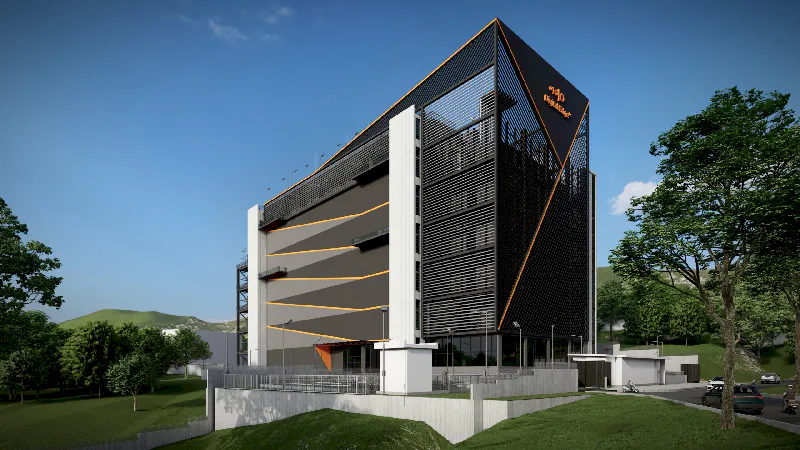
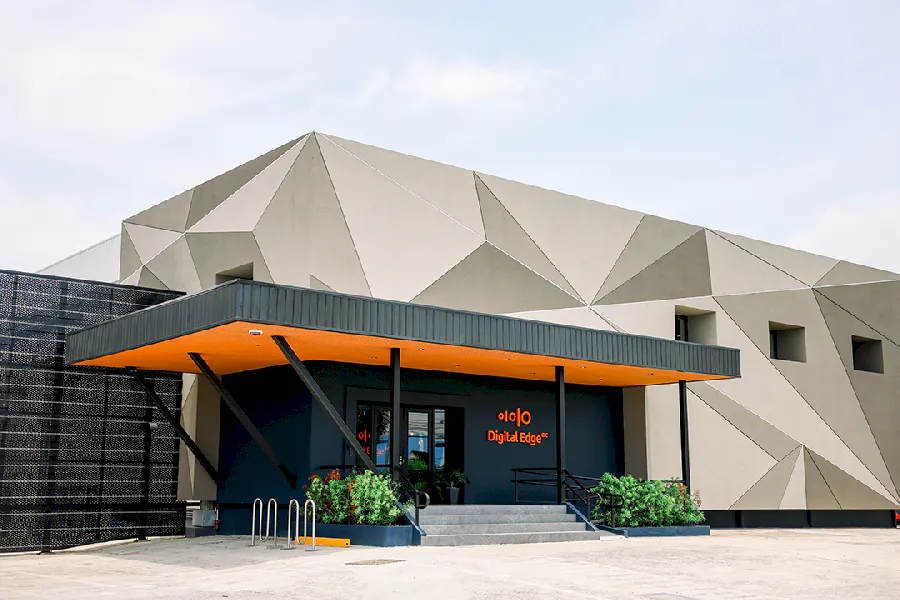
Digital Edge’s in Laguna Technopark was designed to address these enterprise requirements by combining resilient infrastructure, carrier-neutral connectivity, operational efficiency, and room for future expansion. Located just south of Metro Manila, the facility provides convenient access to Manila, Makati, and BGC business districts while avoiding the worst of metro land and flood constraints. The corridor is also physically accessible — the campus is less than 30 km from a major international airport, which keeps site visits, equipment delivery, and remote-hands logistics straightforward. The campus offers around 5,200 m² and 2,200 cabinets at 10MW, and it holds ANSI/TIA-942-C Rating-3 alongside ISO/IEC 27001/14001/45001/9001/50001, SOC 2 Type II, and PCI DSS — a certification stack that regulated buyers can map directly to their audit requirements. If your users and counterparties are concentrated in Metro Manila, that corridor position usually balances latency against land realities well.
A buyer’s checklist for a Philippines colocation site
Use these as evaluation prompts when comparing any colocation provider in the Philippines, during shortlisting and site validation:
- Power: single-line diagram, generator autonomy and fuel contracts, on-site redundancy (N+1 or better), and tariff structure — not just the advertised SLA.
- Sovereignty: map each workload to the Data Privacy Act and any sector rules; confirm whether residency is a legal requirement or a performance choice.
- Connectivity: in-building carrier list, physically diverse backhaul from cable landing stations, and proof of route diversity.
- Cooling and water: annualised PUE and WUE, cooling technology, and exposure to local water stress.
- Land and location: flood risk, zoning, build-out runway, and distance to your users in Metro Manila.
- Operations: on-site staffing model, remote-hands SLAs, escalation paths, and incident history.
Conclusion
Evaluating colocation in the Philippines is less about whether the market is ready — it is — and more about matching a specific facility to what your workload actually needs. The market’s defining feature is that deployment here is latency-led: with no blanket localization mandate, you deploy in-country to serve users and meet sector rules, not to satisfy a generic law.
Pressure-test the same dimensions in every case: power redundancy against a still-maturing grid, connectivity and backhaul behind the cable headlines, cooling efficiency in a tropical climate, and land that is genuinely deliverable. A carrier-neutral, efficiency-certified, corridor-positioned facility such as NARRA1 gives buyers a concrete benchmark to measure others against.
For most teams, the next step is to shortlist against these criteria, then validate the specific site, operator, and backhaul before signing.
Talk to Digital Edge
Compare to see how a Philippines deployment fits alongside the rest of your regional architecture, or about power, connectivity, and capacity planning for your Manila-market workloads.