Tier labels are a common feature of colocation datasheets across APAC, and they can be a helpful shorthand for reliability when used in the right context. They are most useful when buyers understand what the label certifies, where it may reflect a provider’s own claim, and which additional factors should be considered alongside it. This guide explains how data center tiers actually work: the Uptime Institute classification, the difference between Tier III and Tier IV, the parallel TIA-942 rating scheme, and the additional factors buyers should consider when evaluating a facility.
What do the Uptime Institute tiers actually mean?
The Tier Classification System — Uptime Institute defines four levels, each describing what a facility’s infrastructure topology can tolerate. Tier I is basic capacity: dedicated space, UPS, cooling, and a generator, but planned maintenance requires a full shutdown. Tier II adds redundant capacity components — spare UPS modules, chillers, generators — so some maintenance can happen without taking IT offline.
The jump that matters for enterprise buyers comes at Tier III: the facility is concurrently maintainable, meaning any component or distribution path can be taken out of service for maintenance or replacement without interrupting IT operations. Tier IV goes further to fault tolerance: independent, physically isolated systems so that even an unplanned failure of any single component or path does not affect the IT load. The tiers are progressive — each level contains the requirements of the ones below it — and there are no half-steps: “Tier 3.5” is a marketing term, not a classification.
Tier III vs Tier IV: what is the real difference?
The distinction is planned versus unplanned. A Tier III facility promises that maintenance never forces downtime; it does not promise that an unexpected single failure cannot. A Tier IV facility promises both, which requires duplicated, compartmentalized systems — typically 2N or beyond rather than N+1 — plus continuous cooling and physical isolation between redundant paths.
For many enterprise workloads, a well-operated Tier III facility paired with application-level resilience — replication to a second site, tested failover — can deliver strong real-world availability and cost efficiency. That is also how the APAC colocation market has evolved: concurrently maintainable facilities, whether labeled Tier III or TIA Rated-3, are the standard at which enterprise capacity across the region is built, audited, and sold, while fault-tolerant sites serve a narrow band of requirements — genuinely uninterruptible workloads, or single-site deployments with no failover option. If your architecture question is really “one very resilient site or two coordinated ones,” the framework in Evaluating a Hyperscale Data Center in Asia covers how large buyers weigh it.
What does tier certification actually certify?
This is where diligence pays. Uptime Institute — the only body that issues Tier Certifications — awards them at distinct stages: Tier Certification of Design Documents (the drawings meet the tier), Tier Certification of Constructed Facility (the building as commissioned meets it), and Tier Certification of Operational Sustainability (the site is run to sustain it). A facility advertising “Tier III design certified” has certified paperwork, not necessarily a certified building — the constructed-facility certification is the stronger claim.
Watch for softer language too. “Tier III equivalent,” “Tier III standards,” or “built to Tier III” are self-assessments, not certifications. Many reliable facilities operate without formal certification, but buyers should understand exactly what evidence supports the claim. Ask which certification, at which stage, issued when, and verify it in the certifying body’s public directory.
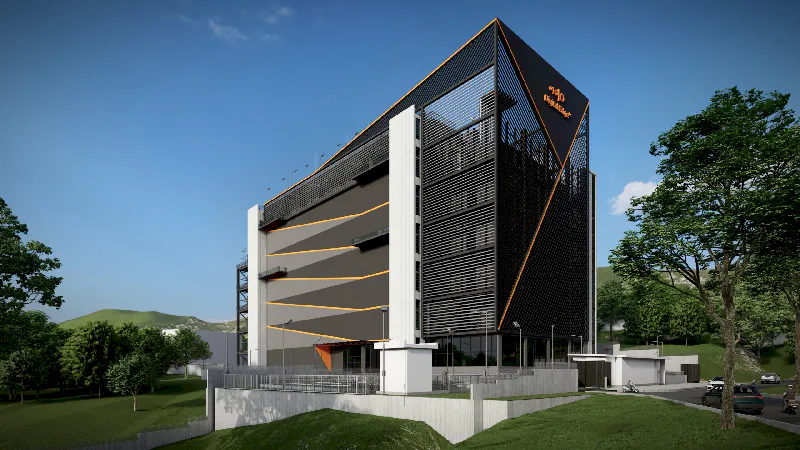
One more thing to know: Uptime is not the only scheme. Some facilities are certified under a separate standard, ANSI/TIA-942, which uses the labels “Rated-1” to “Rated-4” and is audited by licensed bodies such as EPI. Digital Edge’s NARRA1 facility in Manila holds a Rating-3 issued by EPI, part of the stack that made it the first in Southeast Asia to achieve globally recognized certifications. The rule of thumb: “Rated-3” means this scheme, “Tier III” means Uptime Institute — and the same checks apply to both.
What else should buyers consider alongside tiers?
Tier labels describe infrastructure topology, and they are most useful when viewed alongside the commercial and operational commitments that shape real-world resilience. They are commonly translated into availability percentages, but those figures are historical averages, not guarantees; your contractual protection is the SLA, and an SLA’s uptime commitment, exclusions, and credit mechanics are negotiated separately from any tier claim. Two Tier III facilities can carry very different SLAs.
A tier label should also be reviewed alongside the operating practices that help sustain resilience over time: staffing depth, maintenance culture, change management, incident history, connectivity, carrier neutrality, cooling efficiency, and local market risks such as grid stability, flooding, and seismic exposure. Used this way, a tier rating helps narrow the shortlist and creates a stronger foundation for evaluation. The broader vetting sequence is covered in How to Choose a Colocation Provider in Asia Pacific.
How should buyers use tiers in practice?
Treat the tier as a starting filter, then verify three layers beneath it. First, the claim itself: certification body, stage (design versus constructed facility), date, and directory listing. Second, the topology behind the label: ask for the single-line diagram and confirm how redundancy is actually implemented per system — concurrent maintainability can be achieved in ways that differ meaningfully in failure behavior. Third, the operations: staffing model, maintenance regime, and the incident and audit history that show whether the topology is being sustained.
Then match the tier to the workload rather than defaulting to the highest number. Most enterprise workloads are well served by audited Rated-3/Tier III colocation services — concurrent maintainability plus disciplined operations is what the availability math usually rewards — while a single-site system that genuinely cannot blink may justify fault-tolerant infrastructure. The right question is not “what is the best tier?” but “what does this workload need the building to survive?”
Conclusion
Data center tiers help simplify a complex engineering question: what can this facility tolerate without dropping your load? Tier III means maintenance without downtime; Tier IV means single failures without downtime — whichever certification scheme the label comes from. Certification tells you the claim was verified; the stage of certification tells you how much.
The strongest evaluations look beyond the label to the SLA you sign, the team running the building, and the market risks around it. Buyers who verify the certification, inspect the topology, and understand the operating model can use the tier system as a valuable input for a broader resilience decision.
Digital Edge data centers across APAC are certified against globally recognized standards, with audited redundancy and the operational track record behind the label — reach out to our team to discuss what your workload actually requires and which facility fits it.