“AI-ready” has become one of the most common phrases in the data center market. At the scale of a hyperscale campus, it means more than a high rack density figure. It depends on decisions made long before the first building opens, and above all on how much flexibility those decisions leave for what comes next.
This article looks at what an AI-ready hyperscale campus involves in practice, using Digital Edge’s campuses in Indonesia, Thailand, India, and South Korea as examples.
Why is flexibility at the center of AI readiness?
In a market where AI, cloud, and enterprise requirements are evolving rapidly, customers increasingly need infrastructure that can adapt alongside them. Future-ready campuses are no longer defined solely by scale and power availability, but by their ability to support changing densities, cooling requirements, deployment models, and growth trajectories over time.
Hardware is a clear example of how quickly those requirements move. Rack-scale systems such as NVIDIA’s liquid-cooled GB200 NVL72 draw far more power per rack than the GPU servers of only a few years ago. Digital Edge is an official partner of NVIDIA, and its AI-ready data centers are engineered to support demanding accelerated computing workloads, with infrastructure built for performance, density, and efficiency.
Deployment models are changing in parallel. The same campus may host a dedicated AI training environment in one building, wholesale cloud capacity in another, and enterprise colocation alongside both. A customer’s own requirements often shift between those models as a platform matures, which is why capacity that can be configured in more than one way tends to stay useful for longer.
In practice, that adaptability shows up in a few places: power that can grow with each building, cooling designed for densities that have not arrived yet, space that can be delivered as hyperscale or build-to-suit capacity, and buildings completed in stages so capacity can follow demand. The sections below look at each of these in turn. For the facility-level view, our article on AI-ready data centers in Asia covers what teams often review within a single site.
What makes a campus hyperscale rather than just large?
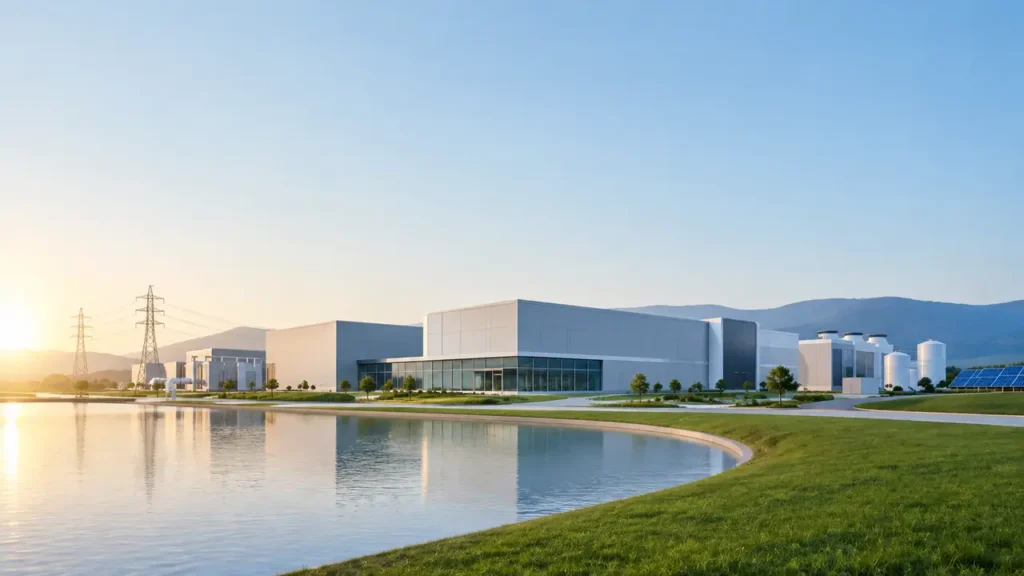
A hyperscale campus is defined less by a single megawatt number and more by how its capacity is organized. It typically brings together several buildings on one site, shared power and network infrastructure, and a delivery plan that adds capacity in stages. Individual buildings or floors can be dedicated to a single customer.
The BOM campus in Navi Mumbai shows this structure. It is a 400MW campus designed for eight to nine buildings that can be delivered as hyperscale capacity, build-to-suit, or both, as set out on our India data centers page. BOM1 is operational and has achieved LEED Gold certification, while BOM2 and BOM3 are being developed in parallel to keep pace with customer demand.
For AI deployments, this structure is itself a form of flexibility. Because the buildings share power, cooling, and network infrastructure, a campus can accommodate different deployment models side by side, and new capacity can be added next to an existing environment without rebuilding those arrangements. Our article on evaluating a hyperscale data center in Asia covers the wider evaluation process in more detail.
How is power secured for AI workloads that keep growing?
Power is often the first constraint for AI deployments in Asia-Pacific. AI workloads are dense and run continuously, and grid capacity in several markets is already under pressure. The International Energy Agency’s Energy and AI report offers useful context on how quickly data center electricity demand is rising.
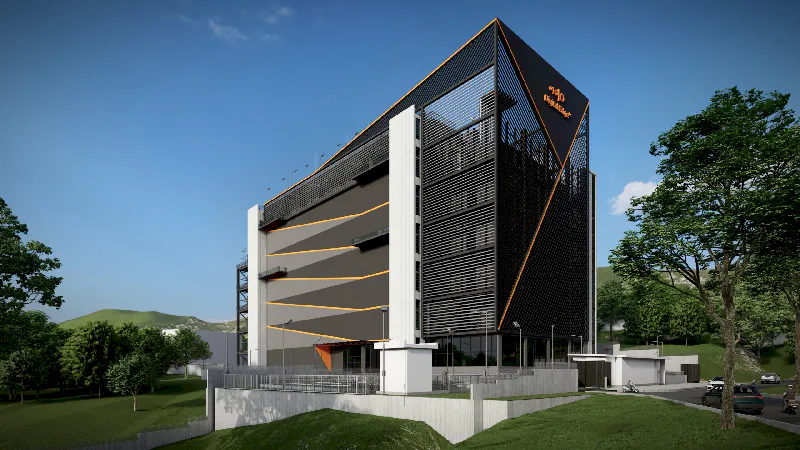
At SEL5 in Ansan, South Korea, Digital Edge secured a 90 MVA power agreement early in the project lifecycle, among the largest in Ansan. As outlined in the SEL5 announcement, the 60MW site uses a dual-feed power architecture supported by two independent 154 kV substations, designed to support 99.999% availability for AI and cloud workloads. SEL5 extends Digital Edge’s South Korea footprint to five data centers across Seoul, Incheon, Ansan, and Busan.
Scale also creates room to grow. The CGK Campus in Indonesia is planned for 500MW of IT capacity at full development, with scalability up to 1GW. That headroom gives customers a path to expand on the same campus as their AI requirements increase.
How is liquid cooling built into the design from the start?
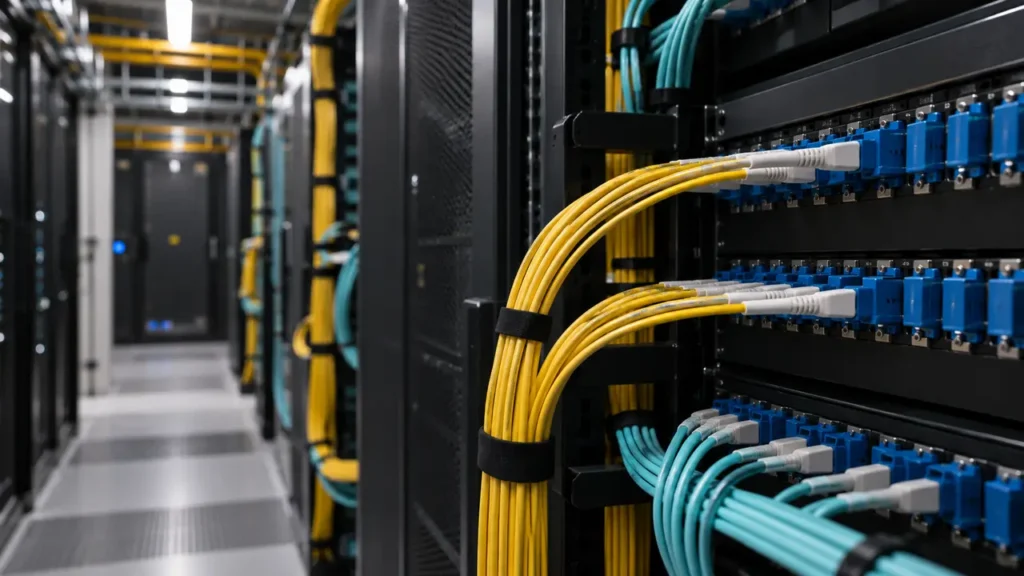
Liquid cooling is becoming a standard requirement for high-density AI hardware. Direct-to-chip cooling depends on facility water loops, heat rejection capacity, and pipe routing, all of which are much simpler to plan at the design stage than to add once data halls are fitted out.
Across Digital Edge’s newer campuses, liquid cooling is part of the base design:
- CGK Campus, Indonesia: designed with direct-to-chip liquid cooling, targeting an annualized PUE of 1.25
- SEL5, South Korea: designed for ultra-high-density workloads and advanced liquid cooling, with a chiller plant that integrates free cooling and a targeted annualized PUE below 1.25
- BOM campus, India: liquid cooling supported by a recycled water supply, described in the next section
Designing cooling in from the start is another way of building in flexibility. Where a campus supports both air and liquid cooling, the same hall can host conventional cloud or enterprise equipment as well as dense AI racks, and the mix can shift as a customer’s requirements change. Because several buildings share central cooling infrastructure, those early design choices also shape what densities later buildings can support. Industry research such as the Uptime Institute Global Data Center Survey tracks how operators are adapting cooling as rack densities rise.
How can a campus cool AI density without straining local water supply?
Cooling at AI density can place sustained demand on local water, and a campus multiplies that demand across several buildings. In many Asia-Pacific markets, data centers share water resources with industry and local communities, so the source of cooling water matters for both sustainability and long-term operations.
At the BOM campus, Digital Edge has partnered with customers and the local community to deploy liquid cooling supported by 10 million liters per day of recycled greywater, an industry first in India. The campus targets an annualized PUE of 1.25 and a water usage effectiveness below 1.75. The greywater would otherwise be discharged into the ocean, and its purchase provides a new source of revenue for the community.
In Thailand, the BKK Campus in the Eastern Economic Corridor uses hybrid closed-loop cooling towers to reduce water consumption. Our Thailand data centers page describes it as a 100MW AI-ready campus in the strategic EEC zone, developed in partnership with B.Grimm Power. The CGK Campus in Indonesia also incorporates recycled water systems.
How does renewable energy scale with each new building?
As AI capacity grows, renewable supply needs to grow with it. Renewable energy is typically contracted in stages, and local regulation can limit how much a project can secure in any one phase. Planning renewable supply alongside each new building helps keep sustainability commitments on track as capacity expands.
For the first phase of the BOM campus, Digital Edge signed a power purchase agreement with Hexa Climate Solutions for up to 83MW of solar energy, delivered in stages from December 2026. This is the maximum renewable capacity permitted under current regulations for the initial development phase. Our article on renewable PPAs and data center site selection looks at how these agreements are influencing where large-scale capacity is built.
The BKK Campus is designed with renewable-ready infrastructure through the partnership with B.Grimm Power, and the CGK Campus integrates renewable energy into its design. These efforts support Digital Edge’s ambition to achieve carbon neutrality by 2030.
How does the campus connect to the city and the wider region?
AI platforms move large volumes of data between training environments, storage, inference services, and cloud regions. Capacity inside a campus is most useful when the routes into it are diverse and resilient.
The CGK Campus in Bekasi is served by fiber from Indonet, Digital Edge’s wholly owned Indonesian telecommunications subsidiary, with new routes to the campus built 100% underground. The campus is less than 15 kilometers from other major data center clusters and about 40 kilometers from EDGE1 and EDGE2 in downtown Jakarta. Together, our Indonesia data centers offer ultra-low latency downtown facilities for financial and digital platforms, carrier-neutral, future hyperscale-AI expansion.
This combination offers flexibility in how AI workloads are placed. Large-scale training can run on the campus, while latency-sensitive inference and interconnection-heavy services stay closer to the city, linked through interconnection services.
Conclusion
An AI-ready hyperscale campus is shaped by the infrastructure behind every building: how power is secured, how cooling and water are planned, how renewable supply grows, and how the campus connects to the wider network. What ties these together is adaptability. As AI, cloud, and enterprise requirements continue to evolve, scale and power availability alone no longer describe whether a campus is future-ready. Its ability to support changing densities, cooling requirements, deployment models, and growth trajectories matters just as much.
Digital Edge’s campuses in Indonesia, Thailand, India, and South Korea reflect that approach, with capacity designed to adapt and grow alongside the customers who use it.
Talk to Digital Edge
To explore AI-ready capacity at our campuses in Indonesia, Thailand, and India, learn more about our colocation services or get in touch with our team.